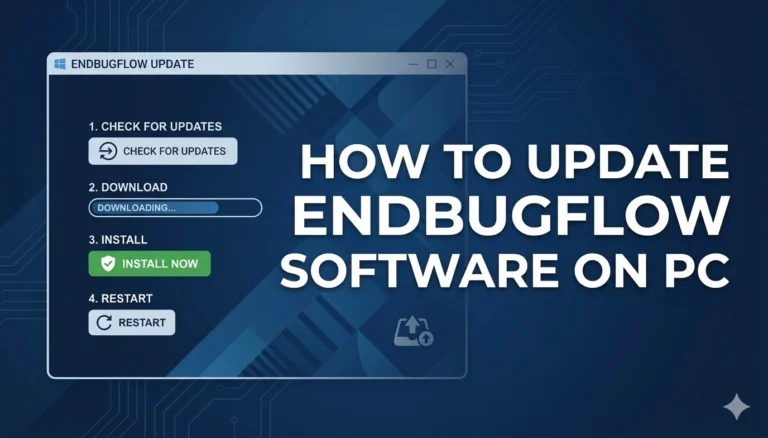
Endbugflow is not your typical music production software. It was created primarily as a debugging and optimization tool rather than a music creation program. While some might wonder if it can be used to create music, its main function is to troubleshoot and improve the performance of the system running music production software. This software is aimed at identifying issues such as memory spikes, software conflicts, and plugin problems that may interfere with your production setup. Essentially, it’s a tool for fixing things, not making them.
If you’re expecting Endbugflow to offer tools like virtual instruments, MIDI sequencing, or audio mixing, you’ll be disappointed. Unlike a Digital Audio Workstation (DAW), Endbugflow does not help you create music from scratch. It’s primarily intended for technical users who need to fix problems or optimize their existing music production software and hardware setup.
Difference Between Endbugflow and a Traditional DAW
A Digital Audio Workstation (DAW), like Ableton Live or FL Studio, is specifically designed to help users compose, edit, and produce music. DAWs come with built-in features such as audio recording, MIDI sequencing, and virtual instruments, allowing for seamless music production. Endbugflow, however, is quite different. While it’s an essential tool for diagnosing performance issues, it doesn’t offer any features for actual music creation.
In short, if you want to record your music, layer sounds, or mix tracks, Endbugflow is not the software you need. It will not help you produce music in the traditional sense. Instead, it’s a system optimization tool for troubleshooting your computer’s performance when running more traditional music production software. So, Endbugflow’s role in music production is indirect at best.
Key Features of Endbugflow Software for Music Makers
User Interface and Workflow
Endbugflow’s interface is designed with simplicity in mind. For users familiar with technical diagnostics, it provides an easy-to-navigate layout that shows detailed system performance and error logs. Its workflow focuses more on system stability rather than creative production, meaning it doesn’t offer any creative tools like synthesizers, samplers, or audio effects that you would find in a DAW.
While this makes it ideal for developers or advanced users seeking to improve their system’s efficiency, Endbugflow doesn’t integrate well into a music production setup for those simply looking to create music. The software excels at highlighting issues but lacks the creative potential of a DAW.
Built‑In Tools — Instruments, Effects, Samples
Endbugflow doesn’t come with instruments, effects, or sound libraries, which are essential elements for music production. Unlike a DAW, where you have access to a range of virtual instruments, audio effects, and samples to shape your music, Endbugflow is designed purely for system troubleshooting. It doesn’t offer any tools that would help you create or manipulate sound, making it unsuitable for anyone looking to compose or produce music.
Instead of building your music from the ground up, Endbugflow serves a different purpose: fixing the problems that might arise when using your DAW, plugins, and other software in your music production workflow.
Pros of Using Endbugflow for Making Music
Workflow Efficiency and Simplicity
For advanced users or developers, Endbugflow’s ability to diagnose and fix performance issues in a music production setup can significantly improve workflow efficiency. When you’re dealing with software crashes, latency problems, or slow rendering times, Endbugflow offers tools that help resolve these issues. This can make the process of music production smoother by ensuring your system is running at its optimal capacity, without interruptions or slowdowns.
Moreover, for tech-savvy music makers, Endbugflow is easy to use and integrates well with a system’s hardware and software, providing a detailed performance report that could help address system inefficiencies that traditional troubleshooting methods might miss.
Accessibility for Beginners
Though Endbugflow is primarily a tool for troubleshooting, it may appeal to beginner producers who struggle with system instability during music production. For example, if you’re new to music creation and have trouble getting your DAW and plugins to work together properly, Endbugflow can step in to help diagnose and resolve these issues, allowing you to focus more on the music itself. However, novice producers should keep in mind that they still need to have another music creation tool (like a DAW) in place to make music.
Drawbacks and Limitations of Using Endbugflow for Music Production
Technical and Functional Limitations
While Endbugflow is fantastic at fixing system issues, it falls short in the functional department when it comes to actual music production. Endbugflow does not offer any tools for recording, mixing, or producing music, meaning it is not a replacement for a DAW. It’s strictly for troubleshooting and system optimization.
This makes it a poor choice for those who want to dive into creating music or need a comprehensive platform for their music production needs. If you’re simply looking for an all-in-one music production suite, Endbugflow will not meet your needs.
Time to Learn and Master
Another downside of Endbugflow is its learning curve, especially for those who aren’t tech-savvy. While it’s a useful tool for troubleshooting, understanding the diagnostic reports and interpreting system logs requires a certain level of technical knowledge. This may not be ideal for beginners who just want to make music rather than fix their system’s technical issues.
Additionally, the fact that Endbugflow is designed for debugging and system performance rather than music creation means you might spend a significant amount of time learning its non-musical aspects, which could detract from your focus on actual music production.
Should I Use Endbugflow Software for My Music Style?
For Electronic / Bedroom Producers
Endbugflow may be useful for bedroom producers or electronic artists who create music on a computer with complex setups involving various plugins and virtual instruments. For example, if you’ve experienced lag, crashes, or compatibility issues when running multiple software programs at once, Endbugflow can help troubleshoot those problems, ensuring your system runs smoothly.
However, remember that Endbugflow doesn’t create or manipulate music—it’s a performance optimizer. If you are creating music but constantly battling system issues, this software might be able to help improve your setup’s performance. But it’s still only a tool for system performance rather than creative production.
For Professional Studio Production
Endbugflow is unlikely to be helpful for professional producers or those working in high-end studios, where the focus is on creating and producing music at the highest possible quality. In these settings, professional music production tools such as Logic Pro, Pro Tools, or Ableton Live are more appropriate, as they offer comprehensive features for recording, mixing, and mastering tracks. While Endbugflow may help solve occasional software issues, it won’t contribute directly to the creative aspects of your music.
Read More: what is ocvibum wealth management ltd